Chronic back pain... a silent threat to long-distance drivers
Health News
10 Jan 2026
views
Chronic back pain... a silent threat to long-distance drivers
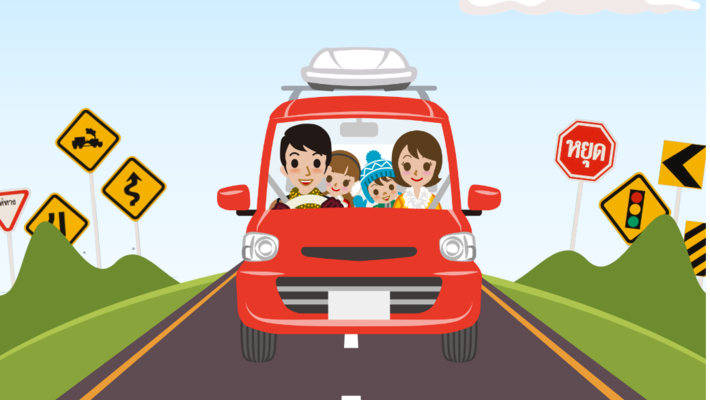
During the New Year Festival, many people drive home or plan long-distance trips to celebrate with family. Driving for several consecutive hours a day might seem like a normal part of life for workers and travelers, but beneath the comfort of a car seat lies a "silent threat" that gradually damages your back health. Back pain from driving is not just temporary fatigue; it is a warning sign of chronic back pain that could lead to a herniated disc in the future.
How does long-distance driving negatively affect the spine and body?
- Increased pressure on intervertebral discs : In a sitting position, the lower spine carries 1.5 - 2 times more weight than when standing because the abdominal muscles do not help support the weight, placing the entire burden on the discs.
- Cumulative muscle fatigue : Keeping your feet on the brake and accelerator pedals for a long time prevents the body from moving naturally to distribute weight, resulting in tension and inflammation in the back and hip muscles.
- Impact of vibrations : Engine and road vibrations (Whole-Body Vibration) stimulate the discs to expand and contract repeatedly at a micro-level, causing tissues around the spine to fatigue and degenerate faster.
- Poorer blood circulation : Sitting in the same position for a long time reduces blood flow to the legs and back, resulting in numbness and fatigue that is more severe than usual.
- Keep your back flush against the backrest : Adjust the seat so that your lower and upper back are in full contact with the backrest. There should be no gap between your back and the seat. If the seat lacks lumbar support, use a lumbar support pillow.
- Proper steering wheel distance : When holding the steering wheel at the 3 and 9 o'clock positions, your arms should be slightly bent, not locked straight, and your shoulders should not be raised or hunched forward to reduce strain on the shoulder blades and neck.
- Knee and hip levels : Adjust the seat height so that your knees are at the same level as or slightly lower than your hips. The seat distance should allow your knees to be slightly bent when the brake pedal is fully pressed to reduce pressure on the lower spinal discs.
- Backrest angle : The backrest should be upright or slightly reclined (about 100-110 degrees). Reclining too much forces you to tilt your neck forward to see the road, leading to neck and shoulder pain.
- Follow the "Rest Every 2 Hours" rule : Stop at a gas station or rest area every 2 hours to get out of the car, walk, stretch, and change posture to reduce accumulated pressure.
- Stretch during breaks : Perform simple exercises such as touching your toes to stretch the back, squeezing your shoulder blades to relax the shoulders, or pulling your knees to your chest to loosen hip muscles.
- Use heat therapy : Upon arrival, if you feel a dull ache, applying a hot pack to the lower back will help dilate blood vessels and relax tight muscles.
- Strengthen core muscles : In the long term, practice Plank or abdominal exercises to create a "natural splint" to help support the spine during long drives.
- Radiating leg pain : If you feel a sharp, electric-shock-like pain radiating from your back down to your hips, thighs, or calves, it is a sign that a nerve is being compressed.
- Numbness or weakness : Continuous numbness in the feet or legs, or feeling that your legs lack strength when walking.
- Severe pain that prevents sleep : Pain that does not subside even with rest or pain that severely disrupts sleep.
- Abnormal bowel or bladder control : If you experience an inability to control urination or defecation along with back pain, this is a spinal emergency that requires immediate medical attention.

Follow Our Social Network
 |  |  |  |  |  |